
C FUTURES | The Future of Hometown: 'County Town Dream Core' and 'Cyber Hometown'
Why Are Young Chinese Torn Between Returning and Not Returning to Their Hometowns?

‘Memories (with hometown) are always infinitely beautified, so beautiful that they make one feel bittersweet.’ - a comment by an app user of RED, a trendy social media in China
What’s Happening?
Dream Core is an aesthetic style within internet subcultures, combining elements of surrealism, fantasy, and the subconscious. Presenting images reminiscent of childhood memories or dreams evokes emotional resonance and dreamlike imagination. Today, such images and videos are increasingly popular among Chinese youth on social media, such as RED.
On these platforms, many Dream Core works revolve around the theme of County Towns or 县城. These works typically involve the digital reprocessing of old photos from the 1990s to 2000s, depicting various scenes from the childhood environments of young people in county towns, such as homes, schools, shops, streets, gardens, and playgrounds.


More comments from RED on County Town Dream Core:
“I can’t quite explain it, but my mind often flashes back to snippets from my childhood. Sometimes a certain smell or food can take me back to that afternoon.” (by 白毛浮绿水)
“At that moment, I feel like I’m back in my childhood. Just thinking about it makes me smile.” (by 会云多云呀)
“I always feel that warm space still exists; it’s just that we’ve changed, and moved to a new space.” (by 哄哄)
“The development in China has been too rapid in recent years, with the rich getting richer and the poor getting poorer. Most small county towns are like this—old buildings and new shops mixed, creating a sense of absurdity due to the clash of eras.” (by 彩云Cloud)
“Some of these photos are amazing, just like my dreams.” (by 今天不当学渣)
A Perspective From Semiotician
To gain a deeper understanding of County Town Dream Core, I interviewed with my colleague Jiakun Wang to provide additional analysis. Jiakun is an Applied Cultural Semiotics Researcher and a core member at FuturistCircle:
Using Yuri Lotman's symbolic domain theory,
the County Town Dream Core is not only an aesthetic expression, it unveils a cultural space that carries unique memories for us.
In this space, the memories of a generation are quietly deposited in the corners and alleys of the county town in the form of texts—they are forced into the cracks by the rhythm of the times, and they still grow savagely on the fringes of urban culture and vernacular traditions. Here, we can see the simple yearning of a group of people who have just come out of the land for a better city life, and we can also feel the absurdity and psychedelia of the pop culture from the city - modern mythology has been repeatedly reprinted in the sinking of pop culture and consumer goods, and has been precipitated into a "county landscape".

These landscapes, which connect the past and the present in time and space, are the "remnants of the times" that have been squeezed out in the process of modernization and urbanization. With the rise of digital media, the gap of symbols is being smoothed out, and the impact of first-tier brands and urban lifestyles is pervasive, almost annihilating the boundaries of regions.
And those mutated old symbols, like a dream that is close to each other, are both distant and vague, stringing together the nostalgia of the youth who once roamed the city, and becoming a collective reminiscence of the era that was not fully invaded by consumerism.

In the tide of globalization, the County Dream Core may be a way for us to find self-identity in the midst of loss.
Each of us is a traveler who left the "town", carrying the expectations of the villagers to us, and taking an one-way "bullet train" to the modern day.
County Dream Core reminds us to cherish the cultural symbols that give shape to us, and it is in the context of these symbols that we find ourselves, find our roots, and find our unique position.
Why Is It Important?
“County Towns are the tails of cities, serving as the link between rural and urban areas. They are the smallest-scale towns and connect rural societies. For rural people, the first stop for consumption, buying a house, or finding work is usually County Towns.”
This perspective is offered by Wang Chunguang, an expert from the Institute of Sociology at the Chinese Academy of Social Sciences.
Today, China is transitioning from “rural China” to “urban China,” but the influence of County Towns still remains significant. As of 2023, there are 1,866 county towns in China, covering 90% of the land area, accounting for 52.5% of the mainland population and 38.3% of GDP. During the rapid urbanization process in China, many individuals born in small towns between 1980 and 2000 (commonly referred to as “post-80s” and “post-90s”) experienced their parents moving to big cities for work or chose to study, work, and settle in these cities themselves. Even though they live in big cities (such as “Beijing drifters 北漂” or “Shanghai drifters 沪漂”), they still seek connections with their hometown memories—despite various reasons preventing their return.

Why are they starting to long for their hometowns?
As China's overall economic growth slows, those living in big cities are facing high living costs, immense work pressure, and employment difficulties—often referred to as involution or 内卷, a popular term in the Chinese internet that describes the competitive pressures faced primarily by urban dwellers. In the past, it was commonly believed that moving to big cities meant more advanced opportunities, more jobs, and higher incomes, while staying in county towns implied being left behind or “unambitious.” However, after living in big cities for some time, they gradually discover that urban life isn’t as ideal as expected, while life back in their hometowns feels steadier, freer, warmer, and carries a stronger sense of cultural identity. Meanwhile, friends who stayed back in the county town may be doing even better. This disparity also stems from significant local government investments in infrastructure and the rise of township enterprises in the past few years, which created tremendous opportunities for a class of affluent businessmen closely connected to the local goverment officials. This previously overlooked wealthy class is now humorously referred to as County Town Brahmins or 县城婆罗门 on social media (a term borrowed from the highest caste in the traditional Indian social hierarchy, used to satirize wealth disparities in County Towns).

So, why can’t they return to their county hometowns?
In 2022 a survey was conducted by Soul, a trendy youths social media on County Town youths living in big cities, it was found that while 80% of respondents wished to return to their hometowns, many chose to remain in big cities. The main reasons included “greater job prospects in big cities” (61%), “better infrastructure and entertainment options in big cities” (52%), and “the salary gap between my hometown and big cities is too vast” (52%).
In addition to these reasons, I believe there is a deeper issue: the “romantic” hometown that the youths wish to return to does not exist in reality. Over the past 30 years of urbanization, many childhood memories have been erased due to the extensive renovations in county towns. For instance, although I was born and raised in Beijing, I would return to my relatives in a County Town in the suburbs of Chengdu during my childhood vacations. In memories, my “hometown” was surrounded by endless farmland, but today it is encircled by high-rise buildings. In the past, traveling to Chengdu took several hours due to inadequate transportation, but now with the subway connecting both urban and rural areas, that boundary has disappeared... This echoes County Town Dream Core—people need to rebuild a “cyber hometown” that they can return to at any time, a place where they can freely dream about their hometown based on reality and fantasy. Through the visual expression of Dream Core, County Town youths have established a spiritual refuge, allowing them to briefly escape the constraints of reality and enjoy a moment of comfort and healing.

What’s Next?
The integration of visuals, music, film, and other content related to County Town Dream Core will create a powerful ‘County Town Literature or 县城文学’ (a new trend in literary and artistic creation) that challenges the delicate, internationalized, and consumerism culture of urban middle classes, prompting people to rethink their relationships with county towns.


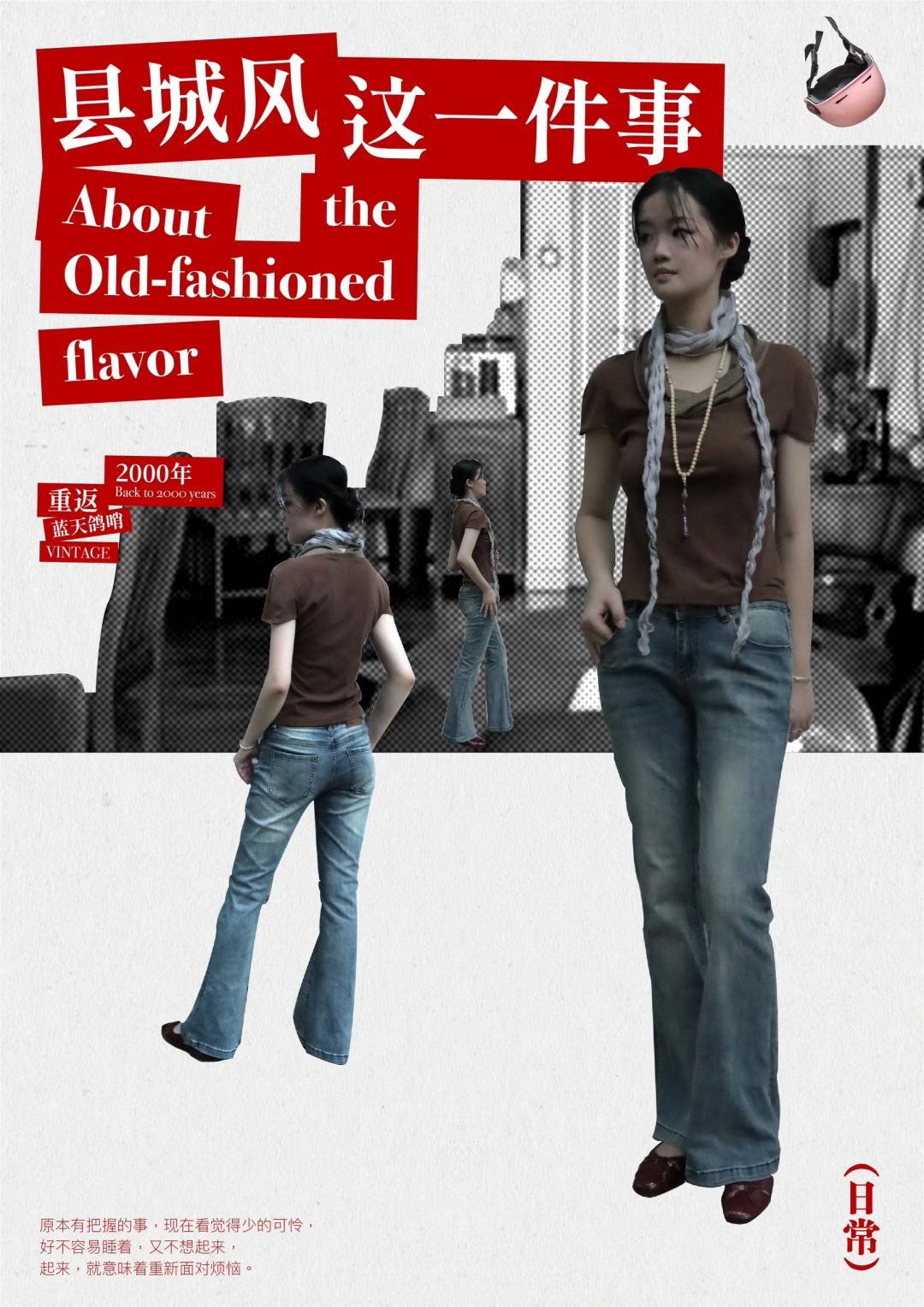
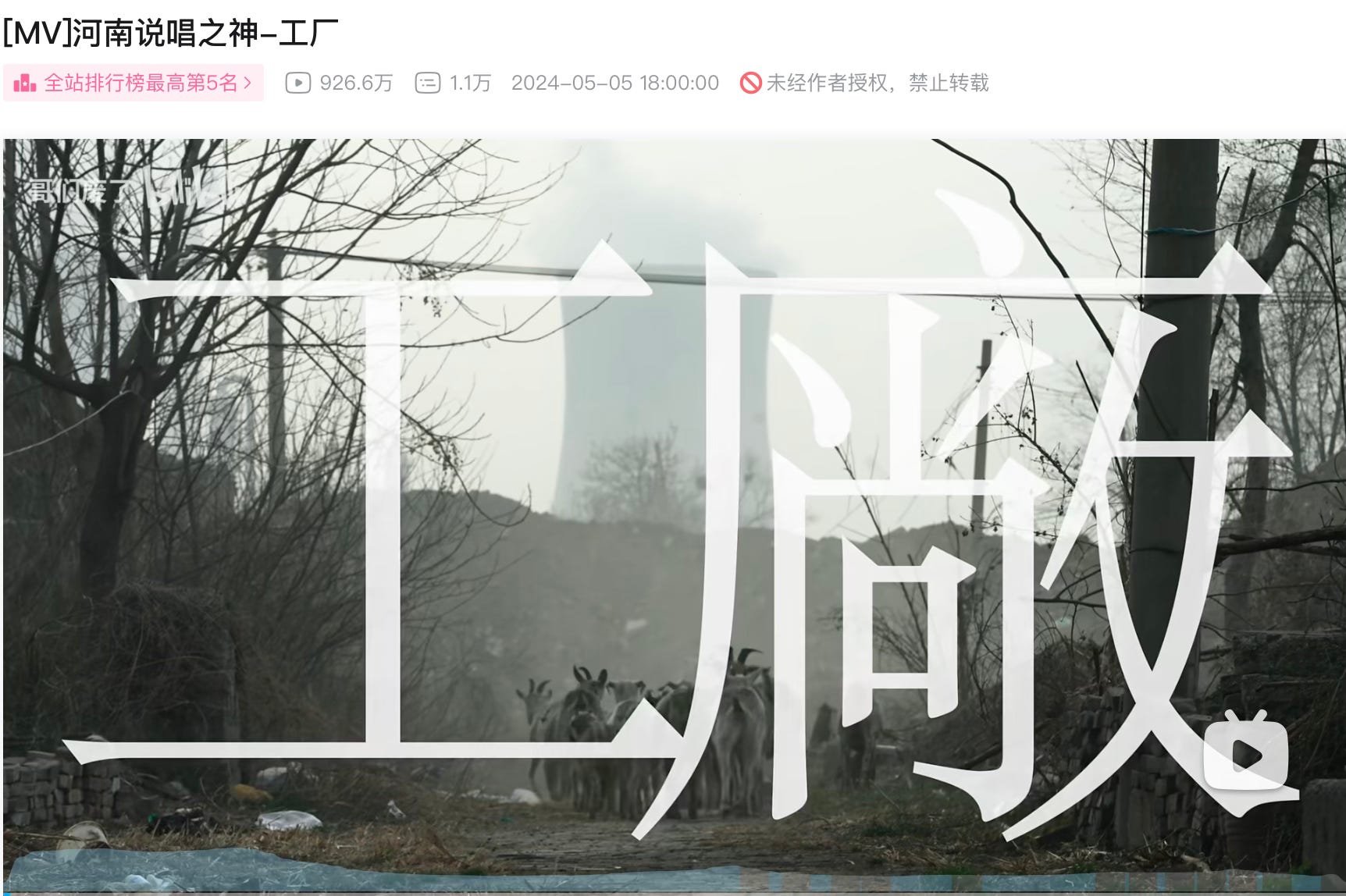
Meanwhile, those unable to return home are seeking various ways to reconnect with their roots. However, the essence of returning to “County Town Dream Core” lies more in dreams than in mere nostalgia or restoration. Most people wish to return to a county hometown that exists not in the objective physical world, but in their hearts. This imagination can be expressed through visuals and texts, or through emerging technologies such as the metaverse, VR/AR, AIGC, and even future brain-computer interface technologies, helping everyone “visualize” their desired futures. Will there be professions like “County Town Dream Core Artist” or “Professional County Town Dream Makers” in the future?
For instance, on RED, young people share how to capture the County Town vibe in big cities. They often choose locations like urban villages (or slums) that have not been fully renovated or historical streets, and some even offer professional training on photoshooting.

In the future, with the support of technological advancements, the county hometown we can return to may not necessarily be our physical birthplace or the only one; on the other hand, the collective narrative of yearning for a county hometown may not exist long-term. It is more of a product of the generational shifts in Chinese social development. As County Town youths settle in cities, their children, as the second or third generation of migrants, may not share the same childhood memories of county hometowns. Perhaps for them, returning to their “county hometown” is more a matter of curiosity and novelty, distant and unattainable.
...
Eventually, there will come a question for all of us — where is the “hometown” in the future?
(end)
If you’re interested in the topic please read on.
A Dream Core, Old Core or Weird Core?
As I’m preparing for the article I feel confused about these terms. In China people tend to use Dream Core or 梦核 to include all above. And here is an article in Chinese trying to explain the Chinese characteristics Dream Core, which is somewhat different from a typical Dream Core in English world.
Here’s a Weird Core project - TooRich City. Actually I didn’t find too many Weird Core ones in the Chinese Internet world.
How to understand a Dream Core?
Since I’m not an aesthetics expert I asked my colleague Jiakun for support, who is an experienced semiotician. Moreover, he shared two experimental videos on Chinese characteristics Dream Core: Video 1, Video 2.
In the first video you will notice some significant Chinese elements, such as Mythological stories, traditional costumes, women's makeup and hairstyle during Republic of China……and more.
By watching the second one (probably made by the same artist/artist group), you will get the clues to County Town Dream Core.
Happy viewing!!
And if you want to learn more about young urban dwellers leaving cities, and emerging rural communities. Read this.

Or download the research white paper my team has published last year. It’s in Chinese. The white paper presents an in-depth exploration of the shift in young people's perspectives towards rural life, prompted by challenges in urban environments such as job competition, health concerns, and a desire for a simpler, more sustainable lifestyle.
And if you’re curious about tech in China’s countryside read Blockchain Chicken Farm, Xiaowei Wang, FSG Originals. A personal opinion is the travel observation is much more interesting than the author’s implications. Because of the cultural difference it seems that the American-born Chinese doesn’t really understand how rural China works in general.
Editor & Author: Louis ZHENG
Appreciate Jiakun WANG for his participation in my interview and the wonderful semiotic analysis!
About C Futures:
We decode China's complex market dynamics with concise, insightful reads based on first-hand experiences—your guide to understanding and navigating this fascinating economy, culture, and people.
Contact Us: CFuturesNow@gmail.com